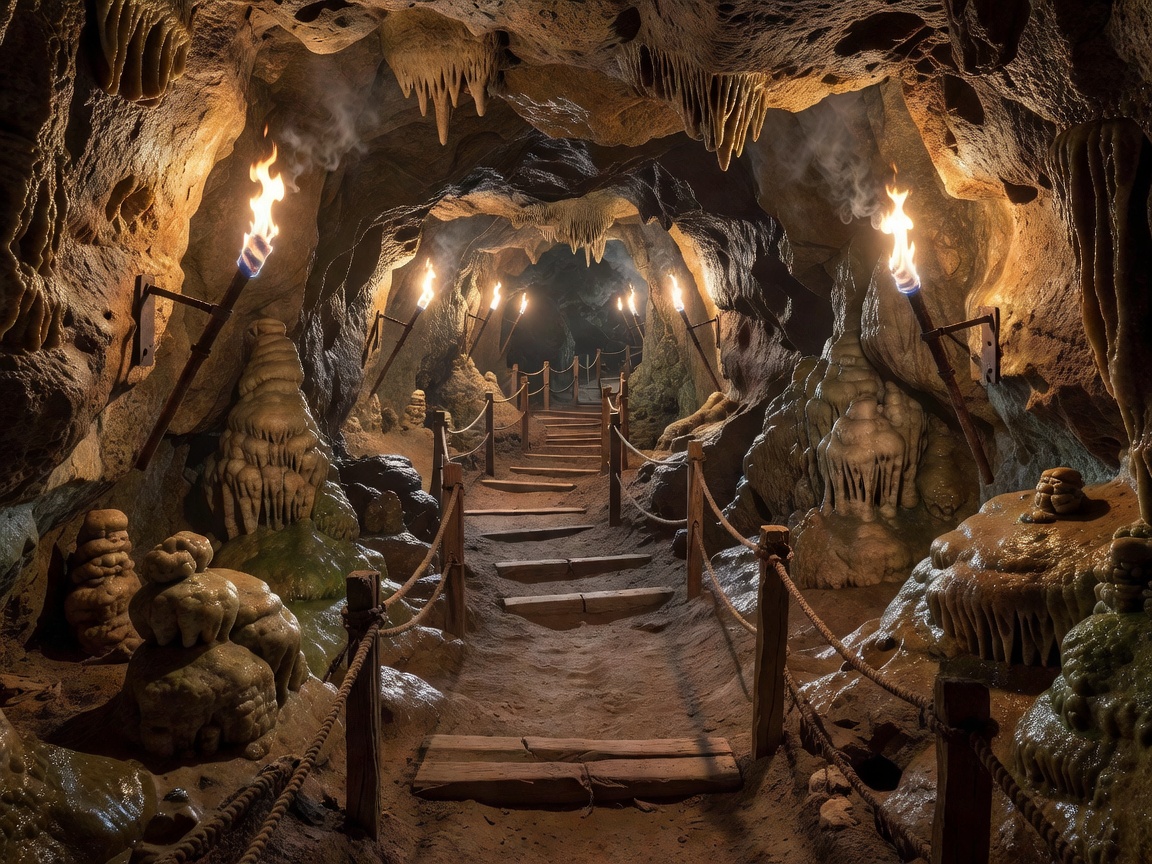
Cave experiences vary more than their marketing labels suggest. A “cave tour” may mean a short, illuminated walk on a built path or a longer guided visit through damp, uneven ground. Read the route description before judging the experience by its title.
Guided cave walks
Guided walks are useful when route finding, interpretation or access rules require local knowledge. The guide may explain rock structure, water movement, formations and conservation. Visitors normally remain with the group and follow a defined route. Ask about stairs, low ceilings, surfaces, lighting and clothing before booking.
Duration, group size and booking conditions differ by site. They should be treated as local variables, not assumed standards. A short tour can still involve demanding steps. A longer tour may use a smooth visitor route. The responsible operator or access authority is the correct source for current details.
Illuminated and family-accessible visits
Developed caves may use fixed lighting, handrails, walkways and interpretation panels. These features can reduce some access barriers, but they do not guarantee step-free travel. Moisture, echo, darkness outside the lit zone and temperature changes may still matter.
Family-accessible does not mean suitable for every child, pram or mobility need. Check minimum ages, carrying requirements, toilets, rest points, noise expectations and evacuation arrangements. Contact the site directly when access information is unclear.
Geology, education and photography
Geology-focused tours prioritise explanation. They may spend more time on rock layers, groundwater, deposits and landscape history. Educational visits may be designed for schools or specialist groups, with different pacing and supervision.
Photography-oriented visits can have specific restrictions. Flash, tripods, bright lamps and stopping positions may be controlled to protect formations and keep routes moving. A camera-friendly description does not mean unrestricted photography. Confirm the rules before carrying specialist equipment.
Underground water and specialist formats
River experiences involve water, changing surfaces and more direct exposure to local conditions. Specialist tours may require helmets, protective clothing or a higher level of physical ability. They may also use routes that are not part of the standard visitor circuit. Do not infer that a specialist format is available, safe or appropriate without current official information.
Compare the practical variables
Record the expected duration, physical demand, lighting, route surface, group structure, guide involvement and equipment. Then compare those points with the least experienced member of your group. If information is missing, ask before travel. Avoid relying on old listings, social posts or generic reviews for access-critical decisions.